
2. Global Restabilization
The process of healing our world by creating sufficient global wellness

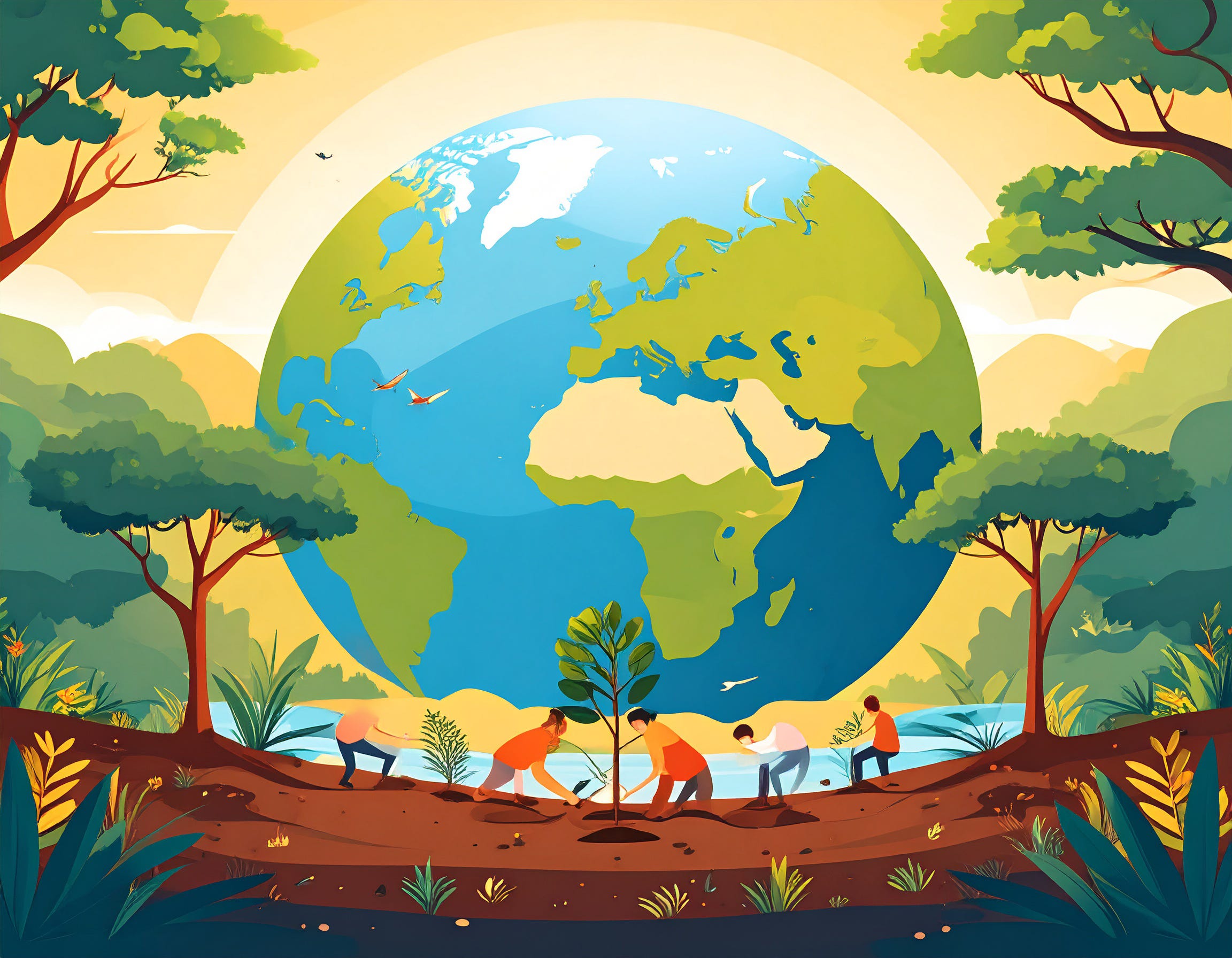
If you’ve read Section 1, you already know that achieving global restabilization requires us to cooperate as a species to create wellness, happiness, and prosperity for all by feeling and following the guidance of love, such that it overflows from ourselves into our relationships, communities, and societies. If you haven’t read Section 1 yet, please be sure to do so before continuing on with this section.
To be clear, “global restabilization” refers to the process of healing our world by creating sufficient global wellness for our Mother Earth to regain the dynamic equilibrium she requires to maintain the well-being of the living beings in and on her body. Currently, due to global destabilization, animals, plants, people, communities, and societies around the world are facing increasing challenges in providing for their core needs. This situation is similar to how, whenever your body is destabilized by illness, your cells, tissues, and organs face increasing challenges in providing for their core needs.
Such challenges are known as resource challenges, meaning that living beings on Earth are facing increasing challenges in accessing and utilizing resources to increase their ability to function. As a consequence, global illness has made it more challenging to create wealth and prosperity than it would otherwise be.
Prior to the onset of our current global illness, living beings on Earth relied solely on naturally renewing ecosystems to provide them with the resources they needed to live well. However, because ecosystems are dynamic, living beings were at times forced to deal with local destabilization, whenever changes occurred in local ecosystems due to shifts in the balance of species, shifts in the climate, or other shifts in the availability of natural resources. Such local destabilization then resulted in illnesses within the ecosystem.
Illness is created in ecosystems relative to how extractive a living being’s relationship is with its ecosystem.
The more extractive a living being’s relationship is with its ecosystem, the greater the relative decrease is in the availability of resources and the more illness it creates. From the perspective of human communities, which serve as the primary means by which human beings manage the availability of and access to resources, there are now fewer renewable ecosystem resources available, while those resources that are available are less reliable and of lower quality than they previously were. This reduction in the availability, reliability, and quality of ecosystem resources is the first limiting pressure on human communities.